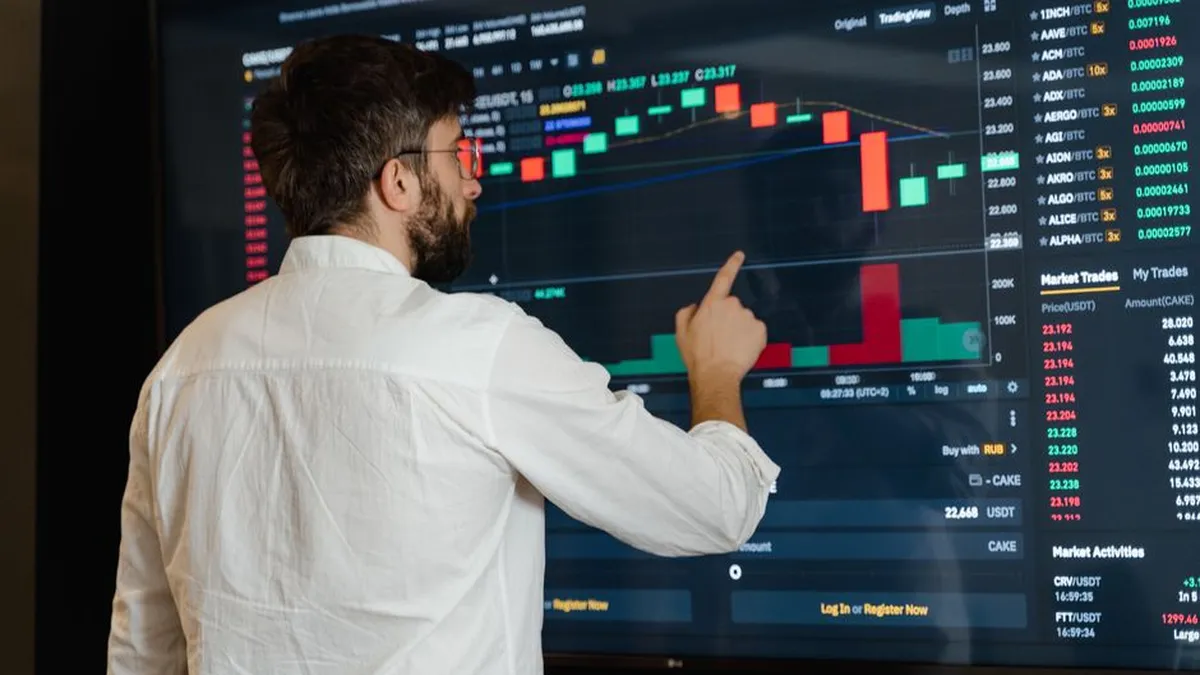

Automated Stop Loss Bybit 2026: The Three Settings Most Traders Configure Wrong
Answer: Bybit launched native TP/SL on its Options book on April 6, 2026, and renewed its Copy Trading TradFi Loss Coverage Program on April 7, 2026, offering new users up to $100 USDT in first-trade protection and returning users up to $50 USDT. The exchange, ranked #2 globally by trading volume with 80 million+ users, now runs automated stop-loss tooling across spot, perpetuals, options, and copy trading.
I track and trade these setups through AO Shadow — signals auto-copied to Bybit via WebSocket in under 200ms. Free Sentinel tier, no credit card →
Bybit shipped two risk management updates in 48 hours. On April 6, options TP/SL went live. On April 7, the Copy Trading TradFi Loss Coverage Program renewed with expanded vouchers. For traders manually babysitting options positions or absorbing first-trade losses on copy setups, these aren't minor tweaks. They close gaps that required third-party bots or constant screen time to work around.
Here's what changed, what it means in practice, and the three configuration errors that turn stop-loss protection into a liability.
What Bybit's 2026
Stop-Loss Infrastructure Actually Covers
Bybit's automated stop-loss tooling now spans four product lines. Before April 6, 2026, options were the one gap in that coverage: no native TP/SL, no automatic exit. Traders either stayed at their screen or paid for third-party bots to manage open Greeks exposure.
The April 6 launch closed that. Options TP/SL uses the same order logic already running on perpetuals and spot: set a trigger price, choose market or limit execution, and attach the order at entry. It's built directly into the options ticket.
| Product | Automated TP/SL | Notes | | Spot | Yes | Trigger price, market/limit execution | | Perpetuals | Yes (Enhanced) | Full/Partial modes, mark vs last price trigger | | Options | Yes (NEW April 6, 2026) | Trigger price, market/limit execution |
| Copy Trading Classic | Yes (Equity Trailing Stop) | Adjusts on account equity, not single-position PnL |
|---|
Copy trading got the Equity Trailing Stop in an earlier update. Bybit describes it as a tool that "automatically adjusts the stop order to minimize loss or lock in profits as the price moves in the trader's favor" without constant monitoring.
That's the full stack now. Spot, perps, options, copy trading. All with automated exits.
The Loss
Coverage Program: What $100 USDT Buys and What It Doesn't
The April 7 renewal of the Copy Trading TradFi Loss Coverage Program puts an insurance-style backstop on top of the automated stop-loss tooling. The mechanics are specific and worth reading before committing capital.
New users get up to $100 USDT in First Trade Protection vouchers. Returning users get up to $50 USDT in Premium Protection vouchers. Both categories receive loss reimbursement within three days of qualification, on a first-come-first-served basis.
Bybit's press release states it directly: "The Copy Trading TradFi protection vouchers complement Bybit's broader ecosystem of trading tools and resources."
But the coverage has clear limits. It caps at $100 for new users and $50 for returning users. It doesn't apply indefinitely. And it doesn't replace understanding how your Master Trader's position sizing actually works. The voucher absorbs a portion of first-trade losses. That's it.
For a detailed breakdown of what this program covers versus what it leaves exposed, this analysis of the loss coverage policy is worth reading before you follow any TradFi strategy.
Copy trading and TradFi instruments involve risk. Losses can exceed amounts initially invested. The voucher program partially offsets first-trade losses only and does not apply to all products or scenarios.
The Three Settings Most Traders Configure Wrong
Automated stops fail in predictable ways. Not because the features are broken, but because traders set them without understanding what each parameter actually controls.
Setting 1:
Mark price vs last price on perpetuals
Bybit's Enhanced TP/SL on derivatives lets you choose mark price or last price as the trigger. Most traders never touch this default.
Mark price is an index derived from multiple exchanges, resistant to single-book order flow. Last price is the most recent trade on Bybit specifically. During thin liquidity conditions, last price can diverge from mark price. A stop set on last price can fire off a single large print that reverses within seconds, exiting a position that would have been fine on mark.
For stop-losses, mark price is generally the cleaner trigger. For take-profits where execution speed matters more, last price can be appropriate. The Enhanced TP/SL guide covers both trigger types in detail.
Setting 2: tpslMode
Full vs Partial on perpetuals
Full mode closes the entire position when the trigger hits. Partial mode closes a specified portion. Traders who leave Partial active without noticing will close a fraction of the position when they expected a full exit. The remaining exposure can move hard in a fast market before they realize what happened.
Set it to Full unless you have a specific, deliberate reason to scale out in stages, and confirm the exact percentage you've configured. Don't assume.
Setting 3:
Stop distance relative to leverage
On spot, a wide stop gives a position room through normal crypto volatility. On a leveraged perpetual, leverage amplifies both gains and losses, which means the same absolute price movement carries a different risk profile.
Bybit's perpetual interface displays an estimated liquidation price for every open position. Check it before setting a stop. Your stop should sit at a technically meaningful level, and it should be above your liquidation price with meaningful separation. What feels comfortable on spot may not be on a leveraged position.
Leveraged trading involves substantial risk of loss. Position sizing should reflect actual risk tolerance, not just the leverage available on the platform.
Is 20% a Good Stop-Loss?
On Bybit spot, 20% is a wide stop. For volatile altcoins where 40-80% drawdowns occur in extended bear markets, a 20% stop can be reasonable if it aligns with a meaningful technical level and the position is sized appropriately.
On a leveraged perpetual, 20% isn't a universal answer. The right stop distance depends on leverage. Higher leverage compresses the range between entry and liquidation. A stop that seems wide might not be. Bybit shows estimated liquidation price on every perpetual position. Check it before placing any stop order.
The habit most retail traders skip: calculating stop distance in relation to leverage, not just as a round percentage of current price.
Can Bybit
Shut Down?
Bybit is the #2 crypto exchange globally by trading volume with 80 million+ users as of April 2026. The April 6 options TP/SL launch, the April 7 Loss Coverage Program renewal, and the earlier Equity Trailing Stop deployment are expansion moves, not signals of a platform under stress.
"Can Bybit shut down?" gets searched because 2022 and 2023 brought high-profile exchange collapses. Bybit was not among them. It continued operating through that period and has since grown its user base. No exchange is zero-risk. But the available data points away from imminent closure.
How to
Set a Stop-Loss on Bybit Spot
Setting a stop on Bybit spot follows a consistent step-by-step process through the Enhanced TP/SL system:
- Open the spot trading interface for your asset
- Select "Stop Order" from the order type dropdown
- Enter your trigger price (the price at which the stop activates)
- Choose execution: market fills immediately on trigger, limit sets a minimum fill price but may not execute if price gaps through it
- Enter quantity to sell
- Confirm
For most retail spot traders, market execution is the practical choice for stop-losses. A limit stop that doesn't fill when price moves fast leaves you fully exposed. Slippage on a market fill is manageable. Missing an exit entirely is not.
If you're using Bybit's API to manage automated order placement, the step-by-step API key setup guide covers the exact permission configuration required for order submission.
If automated position management interests you in a live copy trading context, AO Shadow handles exits on live positions with a full public trade log. You can see every trade with timestamps before committing capital.
FAQ
Is 20% a good stop-loss?
On Bybit spot, 20% is a wide but defensible stop for volatile crypto assets that can drawdown sharply in bear conditions. On a leveraged perpetual, the appropriate stop distance depends on your leverage. A stop that feels comfortable on spot can sit dangerously close to your liquidation price when leverage is involved.
Can Bybit shut down?
Bybit ranks #2 globally by crypto trading volume with 80 million+ users as of April 2026. The April 2026 product launches, including options TP/SL and the renewed Loss Coverage Program, show active platform development. No exchange carries zero risk, but available data doesn't suggest imminent closure or financial distress at Bybit.
How to set a stop-loss on
Bybit spot?
Open the spot interface, select "Stop Order," enter a trigger price, choose market or limit execution, set quantity, and confirm. Market execution fills immediately when the trigger hits; limit execution may not fill if price gaps past your set level. Bybit's Help Center has step-by-step screenshots covering each order type and execution option.
What does the
Bybit Copy Trading Loss Coverage Program cover?
New copy trading users receive up to $100 USDT in First Trade Protection vouchers. Returning users get up to $50 USDT in Premium Protection vouchers. Losses are reimbursed within three days of qualification on a first-come-first-served basis. Coverage applies to TradFi copy trading instruments specifically, not all Bybit products.
What is the
Equity Trailing Stop in Bybit Copy Trading?
The Equity Trailing Stop is available in Bybit Copy Trading Classic. It adjusts the stop order based on account equity movement rather than a single position's PnL. Bybit describes it as a tool that "automatically adjusts the stop order to minimize loss or lock in profits as the price moves in the trader's favor," without requiring constant manual monitoring.
If you're running positions on Bybit and want automated exits without staying at your screen, AO Shadow handles position management with a public trade log where every exit is timestamped and verifiable. That's the standard Bybit's own tooling is moving toward in 2026, and it's already live.