

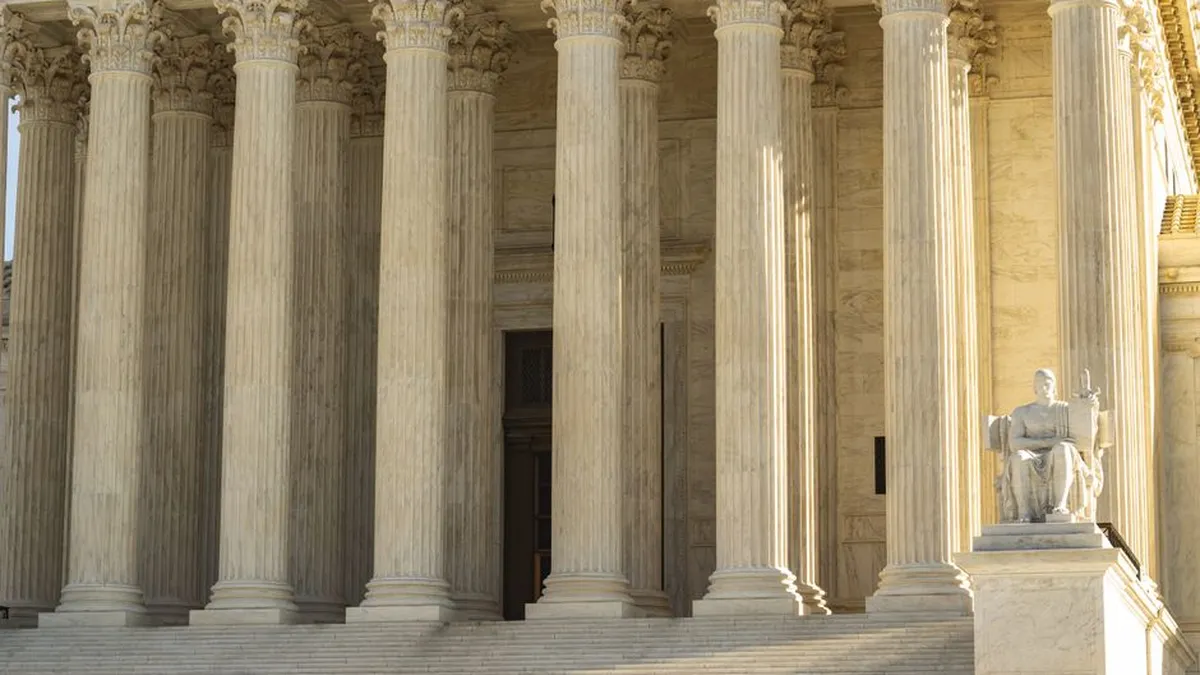
What supreme court decisions today mean for rates: the Fed got protection, the rest didn't
Supreme court decisions today gave traders a split answer. The Court let Fed Governor Lisa Cook stay in her job for now, while also backing President Trump's firing of an FTC commissioner and weakening the older protections around most other independent agencies AP, Reuters. That matters because the first trade is about Fed credibility, but the second trade is about how much policy churn can leak into banks, regulated sectors, and the dollar.
If you want a live framework for a headline like this, AO Trading start keeps the macro setup in one place and AO Copy Trading shows how the follow-through gets managed when the tape gets noisy.
The problem for you is simple: the obvious reaction is to buy the cleanest story and ignore the messy one. That can work, but only if the market believes the Court really drew a line between the Fed and everything else.
What the Court actually did
Reuters said the Fed ruling was a 5-4 decision that blocked Trump's attempt to remove Cook, while AP described it as a move that hobbled his effort to assert control over the central bank. Axios said it was the Court's strongest endorsement yet of Fed independence Axios.
The bigger second ruling matters just as much. Reuters said the Court backed Trump's firing of an FTC commissioner in a 6-3 decision and undermined the old Humphrey's Executor framework that had long protected commissioners at agencies like the FTC Reuters. Chief Justice John Roberts called the Fed a "special arrangement sanctioned by history" and said the FTC setup "violates the separation of powers." Reuters also described the Fed as a "cherished independence" case. That split is the whole story.
In plain English, the Court did not hand Trump a blank check over the Fed. It kept the central bank in a separate bucket while making it easier to remove leaders at many other independent agencies.
Why the obvious trade may be too crowded
The market read is straightforward. If the Fed stays insulated, rate-setting credibility looks safer. That is supportive for long-duration Treasuries, the dollar, and rate-sensitive equities because it lowers the chance of abrupt political interference at the central bank.
But that is only the first layer. The wider ruling can still matter for banks, insurers, healthcare names, telecoms, energy, and any sector where regulation moves through agency leadership. If those agencies become easier to reshuffle, the compliance and policy backdrop gets noisier even if the Fed itself remains protected.
That is why this is a contrarian-trap setup. The consensus trade is to treat the news as simple pro-Fed relief. The risk is that everyone leans the same way before the market finishes pricing the second-order effects.
This is not a memecoin setup. Thin order books, liquidation cascades, and headline-speed moves can force you out before the policy thesis has time to matter. If you do not have a plan for size, stops, and exits, the first move can become the whole loss.
What would prove the trade right, and what would break it
The trade in supreme court decisions today is not "buy everything." It is separate the Fed signal from the broader regulatory signal. Here is the desk view:
| Market read | Why it matters | What would make it fail |
|---|---|---|
| Fed independence looks safer | Central bank credibility matters for rates and the dollar | If political pressure returns through other channels |
| Broad agency protections look weaker | Sector regulators can be reshaped faster | If later court steps narrow the ruling |
| Policy-sensitive sectors may reprice | Banks and regulated industries can face more churn | If investors decide implementation will be slow |
The cleanest confirmation would be a market that keeps treating the Fed as the special case while still demanding a higher risk premium from sectors tied to agency oversight. The failure case is the opposite: if investors decide the ruling is really about wider executive power and start pricing a future fight over the Fed itself.
If you want the mechanics behind that kind of trade, If You Only Took TP1 on AO Signals, What Would $1,000 Become? is a useful reminder that the first take-profit often matters more than the headline. For the platform side of execution and protection, AO Shadow vs 3Commas: Which Copy Trading Platform Is Better in 2026? is a useful comparison.
What AO is watching
AO's live results page shows 3,084 tracked trades, a 67.57% group win rate, and 178610.4 total profit across the tracked roster AO Trading Live Results. The point is not to brag about a number. It is to show that headline trades work better when the risk structure is already clear.
That is the main lesson from supreme court decisions today. The market does not need you to predict every next ruling. It needs you to decide whether the Fed was insulated enough to matter, and whether the broader agency ruling changes the sectors you actually trade.
FAQ
Did the Court give Trump control of the Fed?
No. The Court let Lisa Cook stay in place for now and treated the Fed differently from other independent agencies. The ruling matters because it preserves central bank independence in the near term, even while other agency protections got weaker.
Why do traders care about the broader ruling if the Fed was protected?
Because the broader ruling can still change how quickly agency leadership turns over in sectors tied to regulation. That can affect banks, healthcare, energy, telecoms, and any market where policy risk shows up before earnings do.
What is the main risk after supreme court decisions today?
The main risk is chasing the first headline without checking whether the market sees it as Fed-specific or as a wider shift in executive power. That difference can change how rates, the dollar, and regulated sectors trade after the first move fades.
This is market commentary, not financial advice. Oil, gold, forex and crypto trades can move sharply against you.
If you want the desk view on how to turn supreme court decisions today into a plan, start here and use the AO trading framework to separate the Fed signal from the noise.