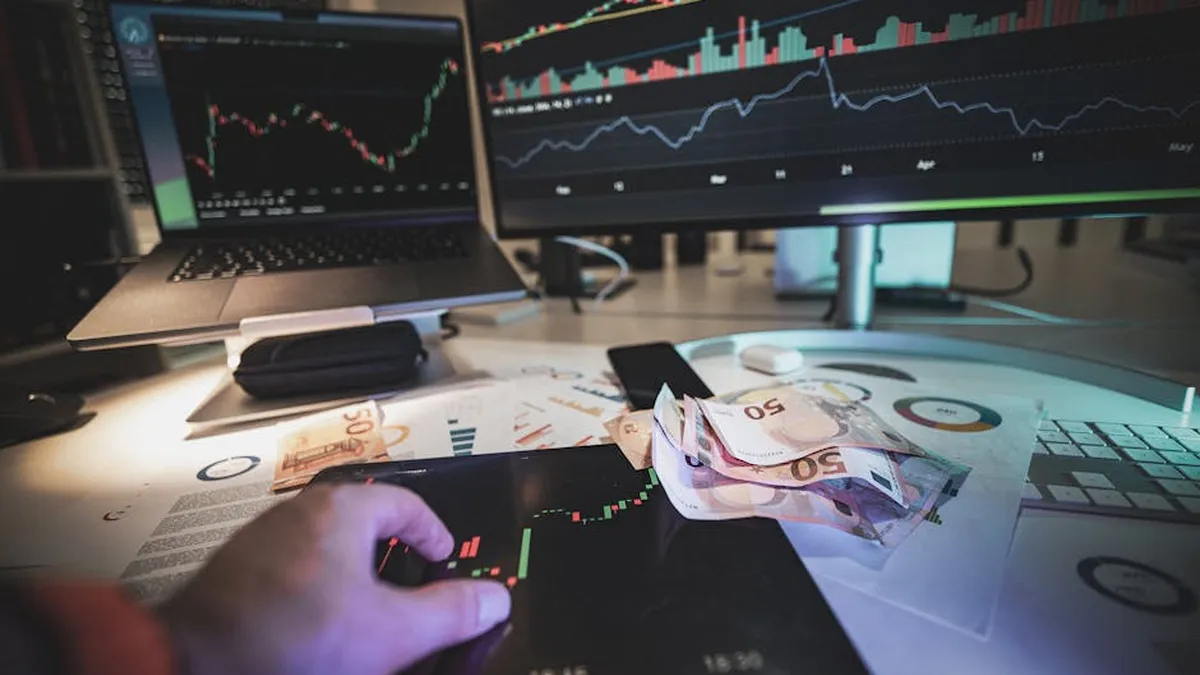
Forex Copy Trading No Upfront Cost: What 'Free' Actually Costs You in 2026
Forex copy trading no upfront cost is a real structural shift, not a marketing fiction. Deriv Nakala accepts deposits from $5. Capital.com's AI-managed portfolios start at $20. FBS CopyTrade sets its minimum at $100. Signal providers on XM earn up to 50% profit share only when they generate gains, meaning followers pay nothing until the trade is in profit. ZuluTrade's model is explicit: 'strategy providers earn only when followers earn.' The zero-subscription era has arrived and the competitive pressure is real.
I track and trade these setups through AO Shadow — signals auto-copied to Bybit via WebSocket in under 200ms. Free Sentinel tier, no credit card →
But 'no upfront cost' is doing considerable work in that sentence. The cost hasn't disappeared. It's been restructured into spread markups, performance splits, and slippage on less-liquid pairs: layers that retail traders absorb without a line item on a statement. And a 48.48% average follower win rate (even when copying profitable providers) is the data point that puts the platform fee debate in proper context.
Here's what the fee architecture actually looks like in 2026, and why provider selection matters more than whether you paid a subscription.
The Performance
Fee Model Has Replaced Subscriptions
The shift from monthly subscription pricing to performance-based splits is the defining commercial change in copy trading over the past three years. It mirrors the hedge fund 2-and-20 model, compressed for retail accounts with minimums starting at double digits.
Under the legacy subscription structure, a signal provider collected a fixed monthly fee regardless of performance. Followers paid whether the strategy drew down 15% or returned 30%. The misalignment was obvious, and by 2024, commission-free brokers and prop-firm-style profit splits had eroded the economics of subscription services. By 2026, performance-fee-only models dominate the mainstream broker offering.
XM now pays signal providers up to 50% profit share. ZuluTrade's aligned-incentive structure means providers earn nothing unless followers earn. eToro hosts over 2.5 million copyable investors with no subscription fee for followers. The commercial logic is sound: it sells better, it aligns provider incentives, and it shifts cost recovery to profitable outcomes rather than access.
For traders assessing platform selection, the shift matters more than it first appears. A 20-50% performance split on a $5,000 account generating reasonable annual returns means real money in provider fees on a good year. That's the visible cost. The spread markup and execution costs sit underneath it.
As the ForexBrokers.com 2026 guide states: 'Copy trading does not guarantee profits, and past trader performance does not guarantee future results.' That disclaimer belongs in large type on every zero-cost pitch.
The Hidden
Cost Layer: Spread Markups and Execution Slippage
No upfront cost doesn't mean no transaction cost. It means the transaction cost is embedded in execution rather than billed as a separate line item, which makes it harder to see and easier to ignore.
Pepperstone, which bundles DupliTrade, Myfxbook AutoTrade, and cTrader Copy into its platform offering, advertises spreads from 0.0 pips on major pairs under FCA, ASIC, DFSA, and CMA regulation. That's the raw interbank rate on an ECN/STP model. Most retail copy trading accounts operate on a market-maker or dealing-desk basis, with spreads widened to compensate the broker. The gap between 0.0 pips and a 1.2-pip EURUSD spread is invisible to a trader watching a profit and loss figure, but it compounds across hundreds of copied trades per month.
Slippage is the second cost. When a signal provider places a trade, the copy executes with a small delay. On liquid pairs like EURUSD or GBPUSD, this rarely matters. On less-liquid pairs, or during high-volatility news events, the copied entry price can deviate from the provider's entry. The provider's track record is built on their execution. Yours isn't, and the difference goes unaccounted in any leaderboard stat.
DailyForex's 2026 broker analysis notes that broker selection materially affects copy trading outcomes, because execution quality differs between platforms even when the underlying signal is identical.
This is the cost that 'no upfront fee' marketing never addresses. It's also the hardest for a retail trader to quantify without detailed trade logs. The marketing is technically accurate. The framing is selective.
For a transparent view of how a copy trading service handles execution and trade history, you can see every trade live on AO Trading's open results dashboard before committing any capital.
The 48.48%
Problem
This is the number that undermines most 'no upfront cost' copy trading marketing: follower win rates average 48.48% even when copying providers who are themselves profitable.
That figure carries a specific implication. Positive provider performance does not transfer cleanly to follower accounts. The reasons are structural: different account sizes, different risk settings, slippage on entry and exit, and provider strategies that work at specific lot sizes but behave differently when scaled across a follower pool. A signal generated from a $500,000 managed account doesn't execute the same way on a $1,000 retail account.
The mathematics matter. A 48.48% win rate on a flat-lot basis means followers lose slightly more trades than they win. Whether the account is profitable depends entirely on average win size versus average loss size. If the provider runs a high risk-to-reward strategy, follower accounts might still be net positive. But a 48.48% win rate with a 1:1 risk-reward ratio produces a losing account. That's arithmetic, not theory.
This isn't an argument against copy trading. It's an argument for treating platform access and fee structure as secondary to provider selection and risk calibration. The barrier to entry has dropped to $5. That's useful. But identifying a provider whose strategy survives the copy delay, whose drawdown profile suits your capital, and whose historical data reflects live rather than backtested conditions requires real analytical work. That work has not got easier because the subscription fee went to zero.
Best Copy Trading Platform Bybit 2026: What the Follower Leaderboard Hides covers how leaderboard rankings distort provider quality assessment, which is worth reading alongside any broker comparison.
Platform
Comparison: The 2026 No-Upfront-Cost Market
| Platform | Minimum Deposit | Fee Model | Regulation | Key Detail | | Deriv Nakala | $5 | Performance-based | MFSA, VFSC | No deposit or withdrawal fees | | Capital.com | $20 | AI-managed portfolio | FCA, CySEC | AI portfolio entry minimum | | FBS CopyTrade | $100 | Zero platform fee | IFSC | Performance split applies | | XM | Varies | Up to 50% provider share | CySEC, ASIC, FCA | Signal provider platform | | Pepperstone | Varies | Spreads from 0.0 pips | FCA, ASIC, DFSA, CMA | DupliTrade, Myfxbook, cTrader bundled | | eToro | Varies | No subscription | FCA, CySEC, ASIC | 2.5M+ copyable investors | | ZuluTrade | Varies | Provider earns only when follower earns | Various | Aligned-incentive model |
| Local Trade Copier | $0 (free) | GPL-2 open source | N/A | MT4/MT5/cTrader, no market risk removal |
|---|
Sources: ForexBrokers.com, DailyForex, ITBFX
Free Tools Exist. Market Risk Doesn't Go With Them.
Local Trade Copier is a GPL-2 licensed, open-source tool that runs on MT4, MT5, and cTrader. It's free. It copies trades from one account to another without a platform fee, subscription, or performance split. ITBFX's trade copier analysis lists it as a viable option for traders who have their own signal source and want to mirror positions across accounts without paying for access.
This matters because the 'free copy trading' question has a real answer in 2026: yes, the software layer can cost nothing. Several brokers bundle copy tools at no additional charge. Pepperstone includes cTrader Copy within its standard account offering. eToro's social trading tools carry no access fee.
But free software doesn't remove the spread. It doesn't prevent drawdown. It doesn't guarantee that the provider being copied uses sound position sizing or that their strategy scales to your account size. The STARTRADER copy trading overview is straightforward on this: free access to copy tools means you're paying through execution costs, not subscription billing.
The macro analogy is clean. A zero-management-fee ETF still exposes you to the underlying index drawdown. 'No management fee' doesn't mean 'no risk.' It means the fee is priced into the product differently, or recovered through a different mechanism. Copy trading with no upfront cost follows the same logic.
For traders who want to see how a copy service handles execution transparency and live results before committing capital, AO Forex publishes a full trade history with no subscription fee on entry.
FAQ
Can I start copy trading without money?
Demo accounts on most platforms let you copy trades with virtual funds at no cost. Real copy trading requires funded capital, even if minimums start at $5 (Deriv Nakala) or $20 (Capital.com). You can test a provider's strategy risk-free on demo, but actual market exposure requires a deposited balance.
Is it possible to make $1,000 a day in forex?
At large account sizes with high-risk providers, daily gains of that scale exist in the data. For a retail follower account it requires significant capital and leverage. Industry win rate data shows followers average 48.48% even with profitable providers, putting consistent daily targets of that size outside typical retail outcomes.
Is there a free copy trader?
Yes. Local Trade Copier is GPL-2 licensed and free to use on MT4, MT5, and cTrader. Pepperstone bundles cTrader Copy and DupliTrade at no additional charge. 'Free' refers to the software cost only. Spread markups and potential performance fees still apply depending on broker and provider structure.
What does 'no upfront cost' actually mean in 2026?
No deposit fees, no subscription, no access charge. Revenue shifts to performance splits (typically 20-50% of follower profits) and embedded spread markups. ZuluTrade puts it plainly: 'strategy providers earn only when followers earn.' The cost remains present; the billing structure has changed.
What's the real risk in no upfront cost copy trading?
Capital is fully exposed to drawdown regardless of fee structure. The 48.48% follower win rate, even when copying profitable providers, reflects execution slippage, account size mismatch, and strategy scaling issues. Zero subscription cost doesn't change underlying trade risk. Provider selection and position sizing remain the primary performance drivers.
For traders ready to move beyond the platform fee debate, the more useful question is whether the signal source is transparent, audited, and sized for your capital. AO Forex runs on a 30% profit share, publishes a full live trade history, and charges nothing until you're in profit. That's the same no-upfront-cost model the market has converged on in 2026, without the leaderboard distortion that obscures provider quality on most broker platforms.