
Quick answer
Oil moved up 35.63% in one week after Strait of Hormuz risk intensified, turning a supply story into a policy-sensitive tape.
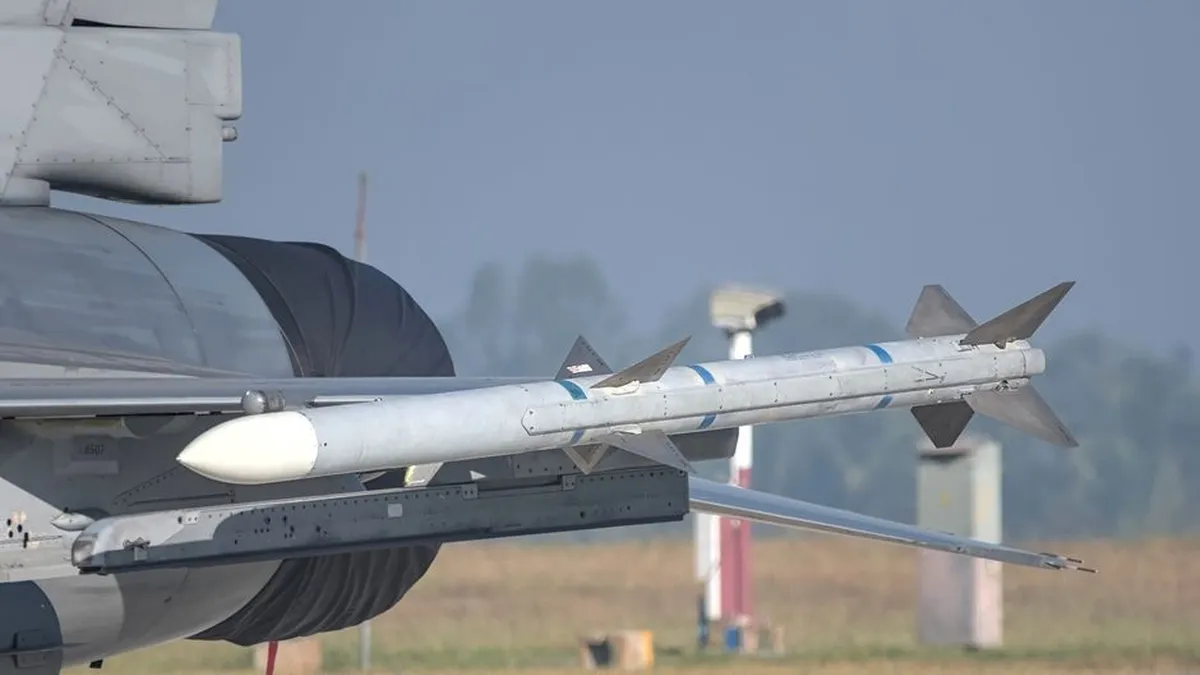
The core signal is transport disruption. When near 20% of global seaborne oil flow is constrained, both price and inflation transmission can move faster than normal.
The immediate range check remains 85 to 110 on WTI. A policy breakthrough should reduce the premium quickly, while prolonged tension keeps upside and inflation spillover risks alive.
WTI crude settled at $94.77/barrel on March 10. Brent at $98.96. Two weeks ago, oil was sitting around $63-65. Then the U.S. and Israel launched strikes on Iran, killed Khamenei, and the Strait of Hormuz went from the world's most critical shipping lane to a no-go zone. Tanker traffic dropped to near zero. Twenty million barrels a day of seaborne oil trade, gone. The weekly gain of 35.63% ending March 7 is the largest in crude oil futures history since 1983. WTI touched $119.48 intraday before pulling back. Every pre-crisis forecast, the EIA's $58, J.P. Morgan's $60, is now toilet paper. This is the oil price rally 2026 will be remembered for, and if you're not paying attention, you're going to get run over.
I track and trade these setups through AO Shadow — signals auto-copied to Bybit via WebSocket in under 200ms. Free Sentinel tier, no credit card →
I've been trading commodities since 2003. I've seen spikes. I've never seen anything move this fast.
The Supply
Hole Is Real
This isn't some speculative froth driven by algorithmic momentum. The supply disruption is physical, and it's the largest in modern history.
Iraq's oil output collapsed by 60%, losing 1.5 million barrels per day. Kuwait and the UAE cut production after running out of storage. Qatar halted LNG output after Iranian drone strikes on its energy facilities. European natural gas rose 63% in one week, the biggest move since March 2022.
Even during the 1990 Gulf War, we didn't lose this much supply simultaneously. The 2003 Iraq invasion took a fraction of global output offline. Russia's 2022 war pushed Brent to about $130, but supply chains adapted within weeks. This time, 20% of global seaborne oil trade is physically blockaded.
| Crisis | Peak Price Impact | Supply Disrupted | Duration | | 1973 Arab Embargo | ~300% over months | Partial OPEC cutoff | 6 months | | 1979 Iran Revolution | ~100% over a year | Iranian output only | 12+ months | | 1990 Gulf War | ~70% spike, fast retreat | Iraq + Kuwait | Weeks | | 2022 Russia-Ukraine | Brent ~$130 briefly | Russian rerouting | Months |
| 2026 Hormuz Crisis | 35.63% in one week | ~20% of global seaborne | Ongoing |
|---|
One question matters: does the Strait reopen or doesn't it?
Where This
Rally Hits a Wall
I'm bullish crude in the short term. But I'm not chasing $150.
OPEC+ compliance is already fraying. When oil crosses $90, discipline breaks down. Every producer with spare capacity starts cheating quotas. We saw it in 2022. We'll see it again. U.S. shale response times have shortened dramatically since the 2020 bust. Permian producers can bring rigs online faster than the market expects. And the demand side? China's economic data keeps disappointing. Their crude imports were already softening before the crisis.
The analysts warning about $150 aren't wrong if the Strait stays closed for months. Qatar's energy minister Saad al-Kaabi said it plainly: "Crude prices could reach $150 per barrel if oil tankers remain unable to pass through the Strait." And Iran's IRGC threatened: "If you can tolerate oil prices above $200 per barrel, continue this game."
But governments aren't stupid. Sustained $100+ oil is a political crisis everywhere. Pressure for a diplomatic offramp builds by the day. G7 emergency reserve releases are coming. Trump has resisted tapping the Strategic Petroleum Reserve so far, but $4 gas nationally changes that calculus fast.
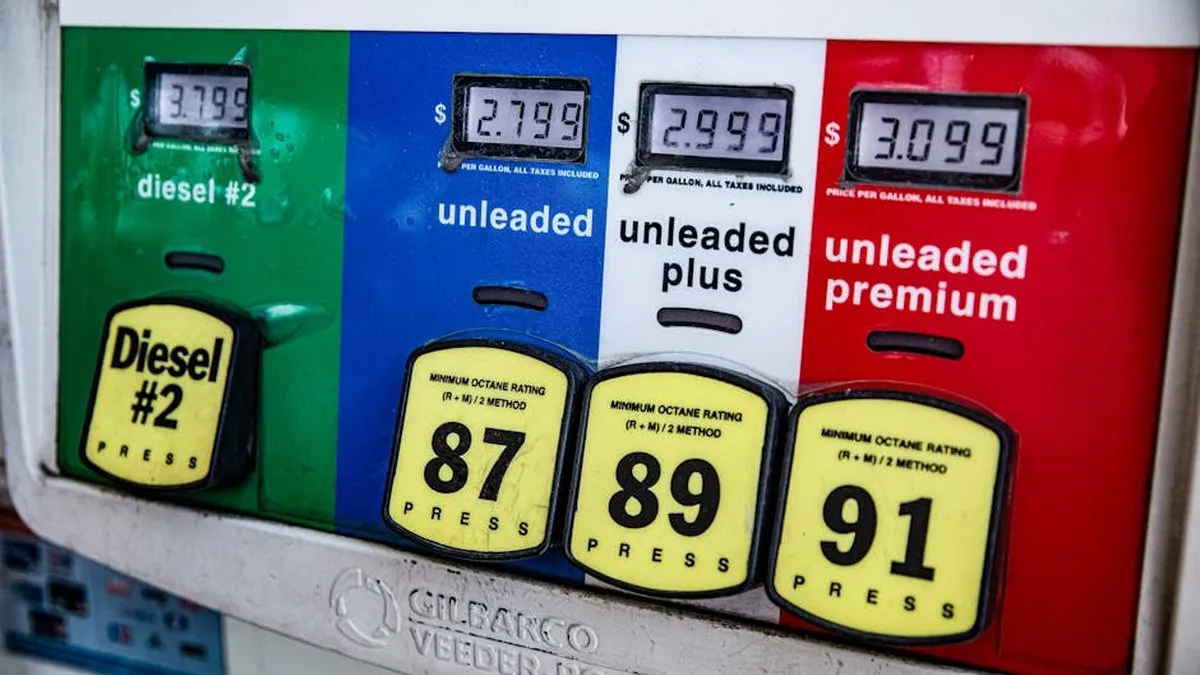
Patrick De Haan at GasBuddy already puts the odds of $4/gallon nationally at 80% within a month. California is at $5.20 right now. The national average jumped $0.48 in a single week to $3.48.
As Mike O'Rourke at JonesTrading put it: "If oil remains at these levels for several weeks, it will be a major global headwind."
I'm trading the $85-$110 range on WTI. Below $85, I'm adding. Above $110, I'm fading. The $119 spike already rejected hard.
The Macro
Damage Is Already Happening
Forget crude for a second. Look at what's happening downstream.
Dow futures dropped 1,011 points in a session. The Nikkei fell over 5%. KOSPI dumped 6%. Asian markets are getting hammered because energy-importing economies like Japan, South Korea, and India just had their input costs explode overnight.
The IMF math is brutal. Every sustained 10% oil price rise adds 0.4% to inflation and shaves 0.15% off global GDP. We're looking at a roughly 50% increase from pre-crisis levels. Do the math: that's potentially +2% inflation and -0.75% GDP if this holds.
Rystad Energy's Janiv Shah sees Brent climbing to $135 if this persists for four months. Four months of disrupted Hormuz traffic would be unprecedented. But two weeks ago, zero tanker traffic through the Strait was unprecedented too.
Energy equities are the obvious play. Wall Street is quietly pricing in $100 oil. I'd be careful chasing here, though. If this resolves diplomatically, and the pressure to resolve it is immense, the snapback in crude will take energy stocks with it.
How I'm
Playing This
I'm long WTI from $87. Took half off at $108. Running the rest with a trailing stop at $90. If we pull back to the mid-$80s, I'm reloading.
I'm not touching Brent-WTI spread trades right now. The spread is behaving erratically because Brent has more direct Hormuz exposure. Too much headline risk for spread positions.
Options are expensive. Implied vol is through the roof. But if you need to hedge physical exposure, pay up. The cost of being wrong without protection in this market is career-ending. Intraday swings exceeding $20/barrel mean overleveraged positions get wiped in minutes.
Watch the Strategic Petroleum Reserve. Trump has refused to tap it so far, calling price increases "acceptable costs for regional security." That changes at $4 gas. A G7 coordinated reserve release is coming too, the only question is timing. And any credible diplomatic signal on reopening the Strait blows the floodgates open. Literally.
For traders watching these moves and looking to build systematic approaches to volatile markets, AO Trading provides real-time trading signals that cut through the noise during exactly these kinds of dislocations.
FAQ
What is the prediction for oil prices in 2026?
Pre-crisis forecasts of $58-64/barrel for Brent are now irrelevant. With the Strait of Hormuz effectively closed, WTI is trading around $95 and Brent near $99. If the blockade persists, analysts see Brent reaching $135 within four months. A diplomatic resolution could send prices back toward $70-80 rapidly. The range is historically wide.
Will oil hit $150 a barrel?
Qatar's energy minister warned crude could reach $150 if tankers remain unable to transit the Strait of Hormuz. That scenario requires the blockade to hold for weeks or months with no diplomatic offramp and no coordinated reserve release. Possible, but the political pressure against sustained $100+ oil makes a prolonged move to $150 the tail risk, not the base case.
Will oil reach $200 a barrel?
Iran's IRGC explicitly threatened $200+ oil if strikes continue. This is a geopolitical threat, not a market forecast. Reaching $200 would require sustained Hormuz closure, further military escalation, and zero policy response from consuming nations. The all-time WTI high is $147 from July 2008. Breaking that would require something worse than anything we've seen.
How much will gas be if oil is $150 a barrel?
Gas prices currently average $3.48/gallon nationally with oil around $95. Rough rule of thumb: every $10 increase in crude adds approximately $0.25 to gas prices. At $150 oil, expect a national average around $4.75-5.25/gallon. California and other high-tax states would likely exceed $6.50. GasBuddy already puts the odds of $4/gallon nationally at 80% within a month at current levels.
Want to trade these moves automatically? AO Shadow copies live signals from professional traders directly to your Bybit account via WebSocket — entry, take-profit and stop-loss placed in under 200ms. The Sentinel tier is free forever, no credit card required. Start your free trial →