
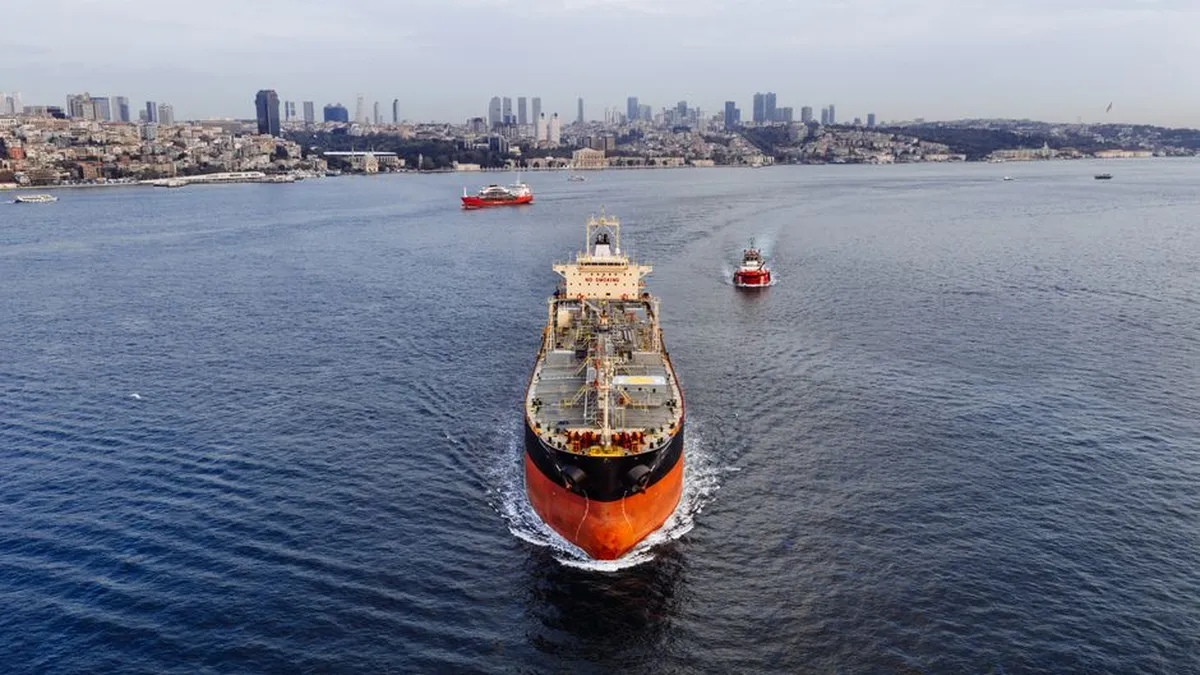
strait of hormuz news is moving crude, freight and LNG at the same time, which is why traders care even if they do not trade oil directly. Reuters reported on June 18 that three Saudi-flagged supertankers carrying 6 million barrels of crude sailed through the Strait of Hormuz after the U.S.-Iran interim deal, and AP said stranded ships had started transiting again. By June 19, Brent was down to $78.31 a barrel and WTI to $76.14 as the market priced in more supply and less geopolitical risk. If you are trading the move, AO Forex is the cleanest place to watch the macro tape, while AO Shadow is where you deal with size, stops and exposure before the next headline hits.
The point is not that the story is over. Analysts expect the deal to release more than 85 million barrels of oil stranded in the Middle East Gulf into global markets, but Reuters also said traders are still waiting for hard evidence that traffic is actually normalising before they commit to the next leg lower. That is the right read on strait of hormuz news. The first move is relief. The second move depends on whether the route really stays open. Reuters
What changed on the water
Reuters said the three Saudi-flagged ships were broadcasting their positions after weeks of hiding voyages by switching off transponders. AP reported that shipowners were moving vessels again after being stranded for 110 days, but it also said the main central route was still closed and had an estimated 80 mines that need to be cleared. Phillip Belcher said, "Those two routes now seem to be fully open," which is helpful, but it is not the same as a clean, permanent reopening. Reuters AP
The detail matters because the trade is not just about Brent and WTI. It is also about ships, cargo schedules, war-risk insurance and whether exporters can move barrels without delay. Saudi Arabia had leaned more heavily on Yanbu while the strait was effectively shut, and cargoes around Fujairah were also moving. That is why a reopening headline can reduce panic without removing energy-market risk.
If you want the mechanics of taking risk off without guessing the top, If You Only Took TP1 on AO Signals, What Would $1,000 Become? is a useful example of why partial exits matter when headlines can flip fast.
Why this hits more than crude
strait of hormuz news is a cross-market shock first. A tighter or looser shipping lane changes freight pricing, LNG flows, refinery margins and insurance costs at the same time. That is why you should not read this only as a crude-only move. The same headline can hit oil, gold, forex and even crypto volatility through the risk channel.
This is also why the market can look calm and still be fragile. If the route stays open, supply can keep normalising. If Iran, Israel and Lebanon keep feeding new military headlines into the tape, the premium can come back quickly. A reopening is a pricing event, not a final settlement.
The risk map traders should watch
Tim Waterer put the key issue plainly: "Traders are still waiting for hard evidence that tanker traffic through the Strait of Hormuz is actually normalising before committing to the next leg lower." That is the right framework for strait of hormuz news. You are not trying to predict every headline. You are trying to see whether the supply chain is genuinely clearing.
| Market | What the Hormuz move is doing | What to watch next |
|---|---|---|
| Brent | Fell to $78.31 on June 19 as tankers started moving again | Whether traffic keeps normalising or a fresh closure threat hits |
| WTI | Fell to $76.14 on June 19 as the supply picture eased | Whether U.S. crude tracks the same relief or lags on its own tape |
| Freight and insurance | Still reacting to route uncertainty | Any new restrictions from insurers or operators |
| LNG and refined products | Can reprice fast if Gulf cargoes keep clearing | Whether export flows stay open without new delays |
The table matters because a reopening headline can calm the market without ending the shock. If crossings keep going and stranded Gulf barrels keep moving, the downside bias in crude stays in place. If the reopening stalls, the same route can become a source of volatility again.
Why a reopening headline can still be a trap
On June 20, AP said Iran closed the Strait of Hormuz again after Israeli attacks in Lebanon, and WorldOil said commercial vessel traffic had continued in recent days. Daniel Shapiro said, "it is not clear yet if that is more than rhetoric." That is the part traders miss. This strait of hormuz news can cut both ways in the same week. It can reduce panic without removing the energy risk, and it can reopen the premium just as quickly if military or political pressure rises again. AP WorldOil
For strait of hormuz news, the real trade is not whether the first tanker moved. It is whether the route can stay open long enough for freight, LNG and insurance to normalise. If that does not happen, the market can snap back on the next military or political update.
For traders acting on this, AO copy trading is the disciplined route in.
FAQ
Is the Strait of Hormuz fully open?
No. Reuters and AP both showed traffic returning, but AP said the main central route was still closed and only the side routes were functioning. That means the market has some relief, but it does not have a clean all-clear yet.
Why did Brent and WTI fall?
They fell because tankers started moving again after the U.S.-Iran interim deal, which lowered the immediate risk premium. Reuters said Brent was $78.31 and WTI was $76.14 on June 19, with traders still waiting for proof that traffic was truly normalising.
What is the biggest risk now?
The biggest risk is a headline reversal. If Iran, Israel or Lebanon pushes the military situation back into the shipping lane, freight, insurance, LNG and crude can all reprice at once. That is why strait of hormuz news stays tradeable even after a relief move.
This is market commentary, not financial advice. Oil, gold, forex and crypto trades can move sharply against you.
If you need to manage the next move instead of guessing it, open AO Shadow for the 7-day full trial. It is built for the part of this trade that matters most now, which is keeping size, stops and exposure under control when strait of hormuz news can flip the tape in minutes.