
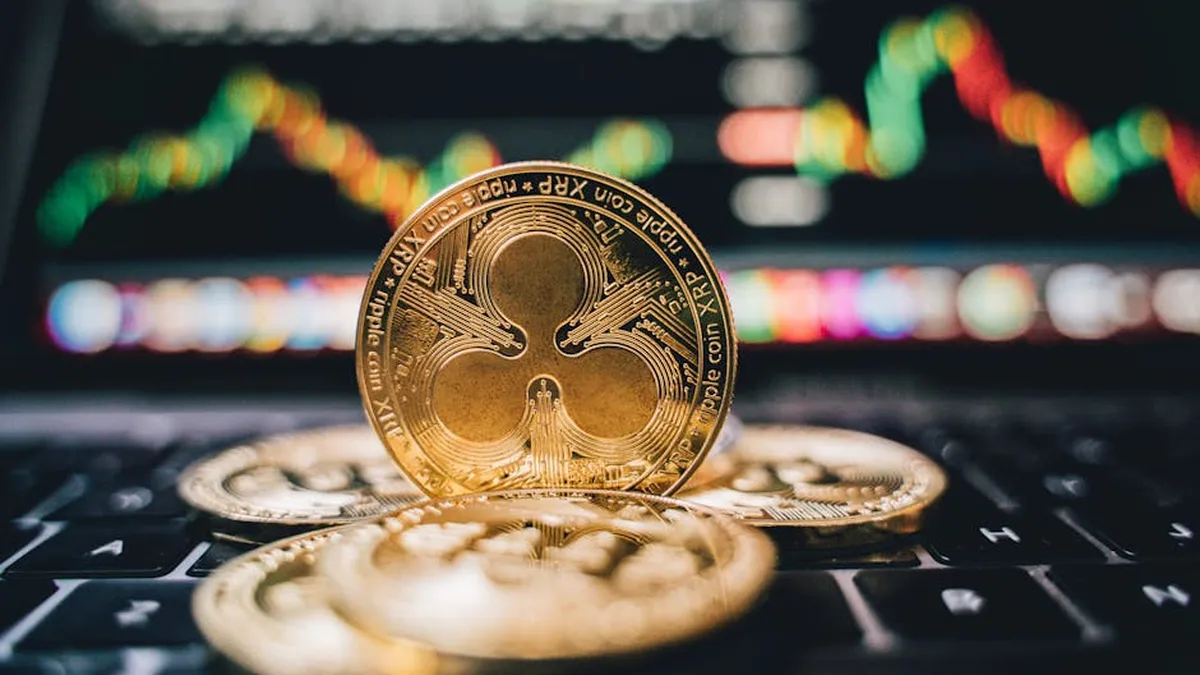
XRP printed $1.41 on March 21, 2026, bleeding 5.8% over three days while Ripple, the company building on top of it, just had one of its best weeks ever. Ripple launched its full five-product financial stack in Brazil with six institutional partners on March 17. The same week, XRP ETFs crossed $1 billion in AUM. The XRPL network hit 7.7 million non-empty wallets, a 13-year record. South Korean trading volume spiked 115% as retail rotated from equities into XRP.
I track and trade these setups through AO Shadow — signals auto-copied to Bybit via WebSocket in under 200ms. Free Sentinel tier, no credit card →
None of it mattered.
The token sits range-bound between $1.41 and $1.50, roughly 53% below its early 2025 highs above $3. Ripple the company is thriving. XRP the token is watching from the sidelines. And a $14.6 million options cluster at the $1.40 strike on Deribit is about to make the next week very interesting, or very painful, for anyone holding a position.
The $14.6
Million Options Wall at $1.40
XRP options open interest on Deribit has concentrated at the $1.40 strike ahead of the March 27 expiry, with $6.95 million in calls and $7.69 million in puts sitting at that single level. That $14.6 million represents nearly 25% of all XRP options on the exchange. CoinDesk reported that "this kind of clustering at a single strike is unusual and typically signals that the market is approaching a key inflection point."
What this means in practice: market makers who sold those options will hedge by buying XRP below $1.40 and selling above it. The result is a gravitational pull that pins price near the strike. Expect choppy, frustrating price action through March 27. Real directional moves come after expiry clears.
Puts outweigh calls by $740,000 at the $1.40 level. That skew matters. If XRP breaks below $1.40 before expiry, dealers need to sell more XRP to stay hedged. That creates a cascading effect where hedging flows accelerate the move lower. A wick below $1.40 into that put-heavy zone could trigger a liquidity grab that takes XRP toward $1.30 before any bounce.
The flip side is less dramatic. A push above $1.50 finds thinner options interest and less hedging resistance, but there's no catalyst strong enough right now to force that move.
Ripple's
Institutional Wins Aren't XRP's Wins
Here's what the XRP community doesn't want to hear: Ripple's enterprise success is structurally disconnected from XRP token demand.
Ripple launched five products in Brazil on March 17, partnering with six institutional players including Travelex Bank, according to 24/7 Wall St.. Ripple was added to the DTCC's NSCC directory on March 2 for post-trade settlement. XRP ETFs hold over $1 billion. These are real wins for Ripple Labs.
But CryptoSlate's analysis exposed the math problem. The XRPL base transaction fee is 0.00001 XRP. A million transactions at that rate burns about 10 XRP. That's it. Ten tokens. Fee-driven scarcity is a non-factor for price.
As CryptoSlate put it: "XRPL can win as infrastructure and enjoy enormous gains while XRP struggles."
| Metric | Value | Source | | XRP Price (March 21) | $1.41-$1.50 | CoinMarketCap | | Options OI at $1.40 Strike | $14.6 million | CoinDesk/Deribit | | XRP ETF AUM | $1 billion+ | 24/7 Wall St. | | Non-Empty Wallets | 7.7 million (13-year high) | CoinMarketCap | | South Korean Volume Spike | +115% | CoinMarketCap | | XRPL Base Fee | 0.00001 XRP | CryptoSlate | | Standard Chartered 2026 Target | $8.00 | Analyst consensus |
| Analyst Consensus Range (2026) | $1.48-$8.00 | Multiple analysts |
|---|
The real bull case for XRP isn't fees. It's liquidity demand. If XRP-mediated cross-border payment volume hits $1 trillion annually, market makers would need roughly 986 million XRP as working capital. 92% of all XRPL DEX trades already flow through XRP as bridge currency. But stablecoins are eating into that thesis hard, turning XRP into what CryptoSlate called "an optional hop rather than the center of liquidity."
The $100 Fantasy and What XRP Actually Needs
Ripple's own CTO Emeritus killed the $100 dream in January. David Schwartz told 24/7 Wall St.: "If rational investors genuinely believed there was even a 10% chance of XRP hitting $100 within a few years, they wouldn't be letting it trade below $10."
That's the most honest thing anyone at Ripple has said about XRP price in years.
Standard Chartered's 2026 target sits at $8, with a 2030 target of $28. The broader analyst consensus for 2026 ranges from $1.48 to $8.00. Even the bullish end of that range requires XRP to 5x from here. The December 2024 reduction of account reserves from 10 XRP to 1 XRP was a deliberate trade: Ripple chose network adoption over token scarcity. More wallets, less friction, lower barrier to entry. That's good for the ledger. It dilutes the scarcity argument for the token.
The 7.7 million non-empty wallets are a 13-year record. That number sounds impressive until you realize wallet count and price have been moving in opposite directions. More adoption, less price appreciation. The paradox is the point.
What Traders
Should Watch Through March 27
Short-term, the $1.40 level is the line. Not because of technical support, but because $14.6 million in options are pinned there. Market makers will defend it from both sides until March 27 expiry clears.
After expiry, the hedging flows vanish and XRP can move on fundamentals again. Watch these signals:
South Korean volume staying elevated or fading tells you whether the 115% spike was rotation or FOMO. If Korean exchanges cool off, one of XRP's biggest marginal buyers disappears. ETF inflows above $1 billion in AUM need to accelerate, not just hold. Holding means the easy institutional money already came in. And Ripple's Brazil deployment needs to show actual XRP transaction volume within 60-90 days, not just press releases.
I'm skeptical. Ripple has announced dozens of partnerships over the years. The pattern is always the same: big announcement, price spike, slow fade as markets realize the partnership uses Ripple's technology without requiring meaningful XRP liquidity. Brazil could break that pattern. But the base rate for Ripple partnership announcements moving XRP price sustainably is close to zero.
For crypto traders looking to automate position management while these levels play out, AO Shadow handles exit execution for free across major exchanges. If you're trading XRP through this options expiry, having automated stop management means you don't need to watch the $1.40 level at 3 AM. See how other traders are positioned or get started with AO Trading to join 1,000+ active traders already using these tools.
FAQ
Will XRP hit $100 dollars?
Ripple CTO Emeritus David Schwartz addressed this directly in January 2026: if there were even a 10% chance of XRP reaching $100, rational investors wouldn't let it trade below $10. Standard Chartered's most optimistic target is $28 by 2030. The $100 price target has no credible analyst support for 2026.
Why is
XRP price falling despite Ripple's partnerships?
Ripple's enterprise deals don't require large XRP holdings. The XRPL base fee of 0.00001 XRP means a million transactions burn only 10 XRP. Stablecoins are replacing XRP as a bridge currency in cross-border payments. Ripple the company can succeed while XRP the token captures little value from that success.
What happens to
XRP after the March 27 options expiry?
The $14.6 million options cluster at $1.40 on Deribit is pinning XRP price through March 27. After expiry, hedging flows disappear and XRP can move directionally. Puts outweigh calls at $1.40 by $740,000, meaning a break below that level could accelerate selling pressure from dealer hedging.
Is XRP a good investment in 2026?
Analyst price targets for 2026 range from $1.48 to $8.00, with Standard Chartered at $8. XRP ETFs hold over $1 billion in AUM and wallet count hit a 13-year high of 7.7 million. But CryptoSlate's analysis shows XRP's fee structure makes token scarcity from usage growth negligible.