
Gold reclaimed $4,700 after the ugliest month the metal has seen since 2008. The March correction carved 14% off the price, dragging gold from $5,312 down to $4,567 in 30 days. That's a $745 haircut. And yet here we are, with JPMorgan calling for $6,300 and Wells Fargo raising its year-end target to $6,100-$6,300. The gold price analysis right now comes down to one question: was March a healthy reset or the start of something worse? I've been trading commodities since 2003. I've seen gold do this before. But the macro backdrop is different this time, and not entirely in the bull's favour.
I track and trade these setups through AO Shadow — signals auto-copied to Bybit via WebSocket in under 200ms. Free Sentinel tier, no credit card →
Look. Gold is still up 46.24% year-over-year from $3,123. That number gets lost in the panic. A year ago, traders were celebrating the break above $3,000. Now they're crying about $4,567. Perspective matters.
March Was a
Bloodbath, and the Fed Did It
Gold's March selloff wasn't driven by some mystery. The Federal Reserve killed the rate-cut narrative. Dead. The CME FedWatch tool shows an 80% probability of another hold at the April meeting, and zero cuts are expected for the rest of 2026. That's the entire bull thesis for momentum traders gone in a sentence. When rate cuts disappear from the calendar, the opportunity cost of holding gold spikes. Money flows into bonds. Algo-driven selling compounds the move. Gold dropped from $5,312 on March 2 to $4,578 by March 31, a decline of over $700 in a single month.
Here's the thing. The same algo-driven bond swings that crushed gold in March haven't gone anywhere. Rate volatility is still elevated. The Fed hasn't softened its language. Anyone telling you the coast is clear isn't reading the tape.
I cut my gold position by a third on March 8 when $5,100 broke. Not because I turned bearish long-term, but because the short-term structure was garbage. Sometimes the best trade is the one you don't make.
The $4,375
Line in the Sand
Every gold price analysis worth reading right now focuses on one number: $4,375. That's the Fibonacci support level that FX Leaders identified as the potential launchpad for a $5,000 rebound. Gold's March 30 trading range sat between $4,480 and $4,532, holding above that line. For now.
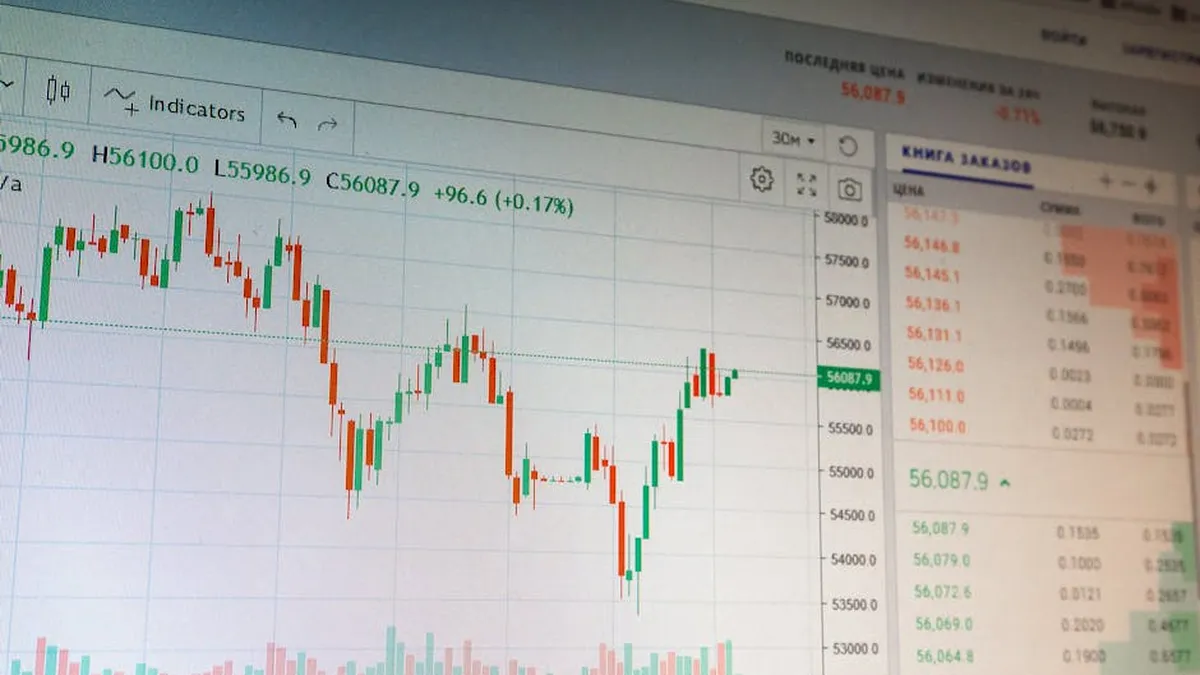
If $4,375 holds on a weekly close, the bounce toward $5,000 is the higher-probability move. If it breaks, $4,000 opens up, and that changes the entire calculus for 2026. I'm watching this level like a hawk. The spot price chart tells you everything you need to know about conviction. Buyers stepped in around $4,500. The question is whether they stick around if we test lower.
Traders managing gold positions through this kind of volatility need tight risk management. If you're running forex or gold trades through a copy-trading setup, AO Shadow's forex desk handles exit management on gold pairs with a $0 upfront model, 30% profit share. Worth looking at if you're not glued to screens 18 hours a day.
| Level | Price | Significance | | All-Time High | $5,595 | January 29, 2026 | | March Open | $5,312 | Start of selloff | | Current Price | $4,567-$4,677 | Bounce zone | | Key Fibonacci Support | $4,375 | Must hold for bull case | | Bear Target | $4,000 | Opens if $4,375 breaks | | Wells Fargo Year-End | $6,100-$6,300 | Most bullish mainstream call |
| JPMorgan Year-End | $6,300 | Institutional consensus high |
|---|
Central Banks Are the Floor Under This Market
The People's Bank of China has bought gold for 15 consecutive months, pushing reserves to 74.19 million ounces. Global central bank and investor demand is forecast at 585 tonnes per quarter through 2026, according to Fortune's March 30 data roundup. That's not speculation. That's structural buying from institutions that don't care about Fed funds futures.
This is why I stay long gold on a multi-month basis even when the short-term looks rough. Central bank accumulation creates a bid that doesn't disappear when retail panics. China isn't buying gold because of a chart pattern. They're buying because they want less dollar exposure. That trade doesn't reverse because Jerome Powell holds rates steady for another quarter.
But let's not pretend central bank demand alone gets us to $6,300. For JPMorgan's target to print, you need at least one of these: a Fed pivot, a genuine geopolitical escalation (the Iran-Hormuz deadline is April 6), or a US recession scare. Without a catalyst, gold grinds sideways between $4,400 and $5,000 for months. I've seen it happen before.
We wrote about the March correction in detail last week if you want the full breakdown of how central bank flows interact with the sell side.
What Has to
Break for $5,800 to Print
JPMorgan wants $6,300. Wells Fargo says $6,100-$6,300. UBS is at $6,200. Fine. But here's what nobody's asking: what specific conditions need to change from right now for those numbers to actually hit?
First, the Fed needs to blink. Not cut rates, necessarily, but at minimum shift its language toward easing. That hasn't happened. Second, the Iran situation needs to escalate enough to trigger genuine safe-haven flows, not just headline noise. Third, inflation data needs to stay sticky enough to keep real yields negative or flat. Right now, real yields are working against gold.
The bond market's recent volatility connects directly to gold's struggles. We covered what the Fed's hold means for positioning in last week's rates piece.
I'll say this plainly: I think gold hits $5,200 by September. Not $6,300. The central bank bid and geopolitical risk get you back above $5,000, but the Fed keeps a ceiling on the move until something fundamentally shifts. My base case is a grind higher, not a moonshot.
The Silver
Question
Silver is sitting at $71/oz as of March 30. Platinum at $1,912. Palladium at $1,424. The precious metals complex is telling a consistent story: the correction hit everything, but gold got the worst of it because it had the furthest to fall.
The gold-silver ratio is worth watching here. When gold corrects hard and silver holds relatively better, it often signals the gold selloff is overdone. That's roughly what we're seeing. Silver's own support structure around $67 is holding, and the supply deficit story there is arguably stronger than gold's.
FAQ
Will gold ever reach $50,000 an ounce?
No mainstream financial institution forecasts gold anywhere near $50,000 per ounce. The most aggressive 2026 targets sit around $6,100-$6,300 from Wells Fargo and JPMorgan. Some multi-year outlier calls reach $10,000. A Financial Times survey of 11 analysts produced a consensus of $4,610 for 2026. The $50,000 figure has no institutional backing.
What will the price of gold be in 2026?
Wells Fargo targets $6,100-$6,300, JPMorgan projects $6,300, and UBS forecasts $6,200 for year-end 2026. Gold's current spot price around $4,567 implies 34-38% upside to those targets. Central bank buying of 585 tonnes per quarter supports the bull case. The hawkish Fed remains the primary headwind.
Is now a good time to buy gold?
Gold's 15% correction from its $5,595 all-time high puts the price in what CBS News calls "a more affordable range". The $4,375 Fibonacci support is holding. Gold ETFs and fractional positions offer entry without committing to a full ounce at $4,567. But the Fed's hawkish stance means this dip could extend further before reversing.
What is driving gold prices in 2026?
Four forces are fighting over gold's direction: hawkish Fed policy pushing prices down, central bank accumulation (China's 15-month buying streak) providing a floor, geopolitical risk from the Iran-Hormuz situation adding safe-haven demand, and algorithmic trading amplifying moves in both directions. The net result is a 46.24% year-over-year gain despite March's correction.
Gold's year-over-year return of 46.24% crushes its long-term average of 7.9% annually since 1971. That kind of outperformance doesn't last forever, but the structural buyers aren't going anywhere. If you're trading gold or forex pairs and want professional exit management without the upfront cost, AO Shadow runs a $0 entry, 30% profit-share model on gold and forex that's built for exactly this kind of market. Volatile. Fast. Unforgiving if you're not watching.